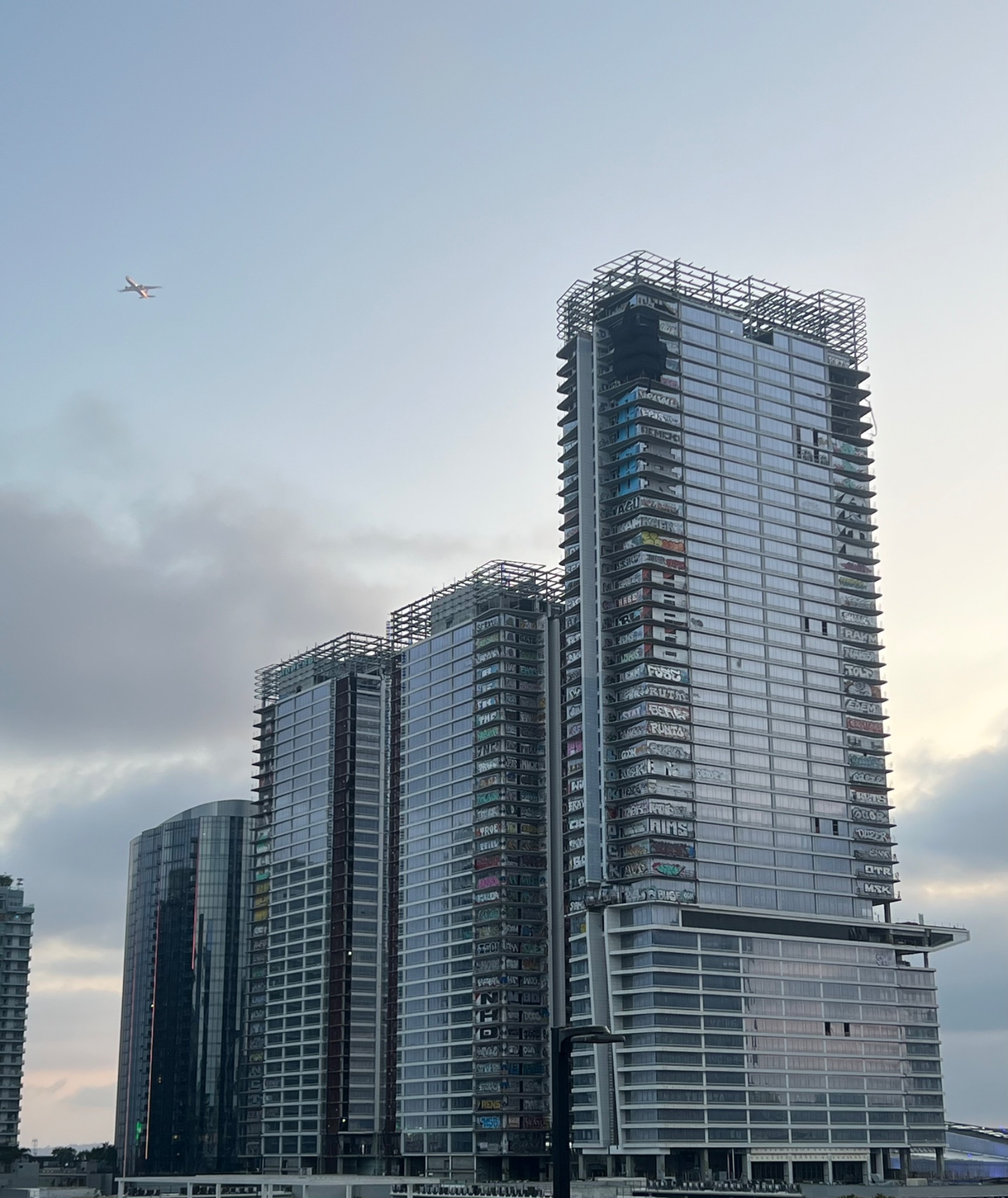
The Takeover of Graffiti Tower
The takeover of Graffiti Tower was not a gradual process. Overnight, the multi-billion enterprise spanning nearly fifty stories was commandeered as a neomodern canvas. Located in the downtown Sports and Entertainment District only a stone’s throw from galleries including the Broad, it begs the question: “where should we draw the line between contemporary masterpieces and vandalism?.” With messages ranging from “set the pace” “amen” and “fuse,” the startling velocity of these graphic artists outpaced construction due to lapses in funding. Incognito, these illustrators infiltrated gaps in fencing, scaling unfinished stairwells to claim the building without warning.
This luxury project turned ghost town invited Los Angeles natives to showcase their abstract messages. Armed with aerosol, the building was defaced by no less than thousands of renegade painters.
Originally launched in 2019, a year prior to the pandemic, the monolith was doomed to begin with. Waist-deep in debt, Oceanwide Holdings relinquished control following four successive years of blueprints. From real estate to exhibit, the deserted high-rise stands sentinel to its own signatures, surrounded by stadiums, arenas, and museums. Without security present to patrol the site, sabotage was swift. The eclectic reminder of an underground cultural scene, it now awaits new management. Despite the stalemate, bidders have been at war over the lucrative square footage. Millions of the municipal budget have been reserved in advance of the Summer Olympic Games. Since foreclosure, the asking price has decreased to a grand total of four hundred fifty million. Although hotly debated, it remains under the watchful eye of city council with a vision to renovate and restore the condominiums.
0 Comments Add a Comment?